

Does even your moisturizer sting some days? The best facial for rosacea is a barrier-first, low-irritation approach—not the strongest corrective treatment; Glo2 is a conditional option for settled skin, while an active flare belongs with your dermatologist.
- The best facial for rosacea prioritizes comfort and barrier support, not aggressive exfoliation.
- Brittdaesthetics considers Glo2 for settled, suitable skin—not as a treatment or cure for rosacea.
- Burning, worsening redness, or eye symptoms call for medical assessment before a facial.
- Tell Britt about prescriptions, retinol, recent flares, and your personal triggers before treatment.
Why this matters: corrective doesn't mean more intense
When your skin looks red and feels unpredictable, it's tempting to book something that promises a fresh start. But rosacea is a chronic inflammatory condition, and a cosmetic facial doesn't replace diagnosis, prescription treatment, or ongoing medical care.
I'm Britt, a licensed aesthetician at Brittdaesthetics in Mooresville. My job is to help you choose suitable cosmetic care—not push your skin through a treatment just because it's on the calendar.
At Brittdaesthetics, my best facial recommendation for rosacea-prone clients starts with skin comfort and suitability, not treatment intensity. For your 2026 skin plan, that means separating goals such as hydration and surface smoothness from the medical management of rosacea itself.
What makes the best facial for rosacea?
Here's what matters more than an impressive treatment name:
- Skin comfort: Your skin shouldn't already be burning, unusually hot, or struggling with basic skincare when you arrive.
- Barrier support: Gentle cleansing and suitable moisturizing matter more than chasing an immediate exfoliated finish.
- Trigger awareness: Heat, friction, fragrance, and certain skincare ingredients can aggravate rosacea. Your own history guides the conversation.
- Adjustable treatment: A facial should allow unsuitable components to be left out. An optional step isn't automatically a helpful step.
- Clear scope: Aesthetic care supports cosmetic goals. It doesn't diagnose rosacea, eliminate visible vessels, or replace prescribed treatment.
You don't need a perfect skincare routine before asking for help! You do need an honest conversation about what your skin is doing right now, including the products that haven't been agreeing with it.
Rosacea-friendly choices at a glance
These are care pathways, not three interchangeable appointments. “Barrier-first facial” describes a treatment approach to ask about, not a named service on my menu.
| Rank and option | Best for | Standout feature | Key limitation |
|---|---|---|---|
| 1. Barrier-first facial approach | Settled skin with dryness or tightness | Prioritizes gentle cleansing and suitable hydration | Doesn't treat the underlying rosacea or remove visible vessels |
| 2. Individually assessed Glo2 | Settled skin with additional cosmetic goals | Allows discussion of pod choice, strength, and component suitability | Exfoliation and active sensations aren't suitable for every rosacea-prone client |
| 3. Dermatologist-led care instead of a facial | Active flares, uncertain diagnosis, or eye symptoms | Addresses medical assessment and rosacea management | Isn't a cosmetic facial or a substitute for later skincare planning |
1. Barrier-first facial: best for dryness and tightness
If your skin is settled but feels dry, tight, or easily overwhelmed, a barrier-first approach is my starting point. The goal is straightforward: cleanse without unnecessary friction, use suitable moisturizing products, and avoid adding irritation in pursuit of a glow.
Rosacea-prone skin can react to products other people tolerate comfortably. That's why “hydrating” on a treatment description isn't enough; the actual ingredients, application, and your recent skin history still matter.
Barrier-first facial pros
- Keeps comfort ahead of aggressive surface correction.
- Gives you space to discuss products that sting or leave your skin feeling tight.
- Avoids treating every concern with another exfoliating step.
- Fits a longer-term conversation about gentle home care.
Barrier-first facial cons
- Won't erase persistent redness or visible blood vessels.
- Even moisturizing products need individual suitability screening.
- Isn't the right appointment when your skin needs medical assessment first.
Best for: Settled rosacea-prone skin where dryness and discomfort matter more than texture correction.
At Brittdaesthetics, I want you to describe the feeling as well as the appearance. “My cheeks look red” and “water burns my cheeks” are different starting points, and they shouldn't lead automatically to the same treatment.
Verdict: Buy into the barrier-first approach; book only after confirming an appropriate treatment is available for your skin.
2. Individually assessed Glo2: best for settled skin with cosmetic goals
Glo2 is my typical first treatment for most clients, and The Glo Collection sits at the heart of my ongoing skincare approach. Rosacea changes the screening conversation, though: being my usual starting point doesn't make Glo2 an automatic recommendation for every red or reactive face.
For a suitable client whose skin is settled, I assess the treatment against goals such as hydration and surface appearance. Pod choice, strength, and the suitability of each component matter more than completing every possible step.
What does Glo2 feel like?
Glo2 sensations vary by person and OxyPod. They range from light, bubbly tingling to a very active sensation depending on pod strength; I won't describe every Glo2 facial as barely perceptible.
A stronger sensation isn't proof of a better result. If your skin feels uncomfortable, speak up rather than trying to be a “good client” and tolerate it.
The massage tip is used in lymphatic drainage motions. That's why the step is described as “detox”—not because the facial removes bodily toxins or treats the cause of rosacea.
Individually assessed Glo2 pros
- Connects a first visit with an ongoing, personalized skincare plan.
- Brings pod choice and treatment strength into the suitability discussion.
- Addresses cosmetic goals without presenting a facial as medical rosacea care.
Individually assessed Glo2 cons
- Active sensations and exfoliation can be unsuitable for reactive skin.
- Optional RF controlled heating needs separate suitability assessment; heat can trigger rosacea.
- Doesn't cure rosacea or guarantee less redness after treatment.
Best for: Settled, individually assessed skin with cosmetic goals beyond managing rosacea symptoms.
For most clients, I recommend Glo2 every 4 weeks, individualized as needed. That isn't a claim that everyone's skin renews on exactly that schedule, and it isn't a rosacea prescription. Your response and medical guidance determine whether that rhythm belongs in your 2026 plan.
Verdict: Hold until assessed; choose Glo2 only when your skin and the selected components are suitable.
3. Dermatologist-led care: best when a facial should wait
If your skin is burning, flaring, or suddenly behaving differently, the best choice isn't a more corrective facial. It's medical assessment before cosmetic treatment.
Redness alone doesn't confirm rosacea. Other conditions can look similar, and rosacea itself can involve persistent redness, flushing, inflammatory bumps, and eye symptoms. A licensed aesthetician doesn't replace the clinician who diagnoses and manages those concerns.
Dermatologist-led care pros
- Helps establish whether rosacea is actually the cause of your symptoms.
- Provides access to medical treatment when appropriate.
- Helps clarify which cosmetic treatments should wait or be avoided.
Dermatologist-led care cons
- Doesn't provide the cosmetic facial experience you originally planned.
- Can mean postponing surface-smoothing or glow-focused goals.
- Still requires ongoing communication about skincare and triggers.
Best for: Active flares, unexplained persistent irritation, or symptoms involving your eyes.
Tell a medical professional about gritty, irritated eyes or inflamed eyelids. Eye pain, light sensitivity, or vision changes need prompt medical attention—not a facial consultation.
Verdict: Skip the facial during an active flare and prioritize appropriate medical care.
How I rank these options
This 2026 guide ranks care by skin comfort, barrier support, trigger awareness, treatment flexibility, and medical scope. It isn't a claim that one facial has been clinically proven best for everyone with rosacea.
Barrier-first care leads because it prioritizes avoiding additional irritation. Glo2 follows as a conditional cosmetic option. Dermatologist-led care moves to the top whenever symptoms make a facial inappropriate.
Here's the decision in plain language:
- Skin comfort: Is your skin settled enough to discuss cosmetic treatment?
- Treatment fit: Do the proposed ingredients and steps suit your history?
- Medical care: Do current symptoms need diagnosis or treatment first?
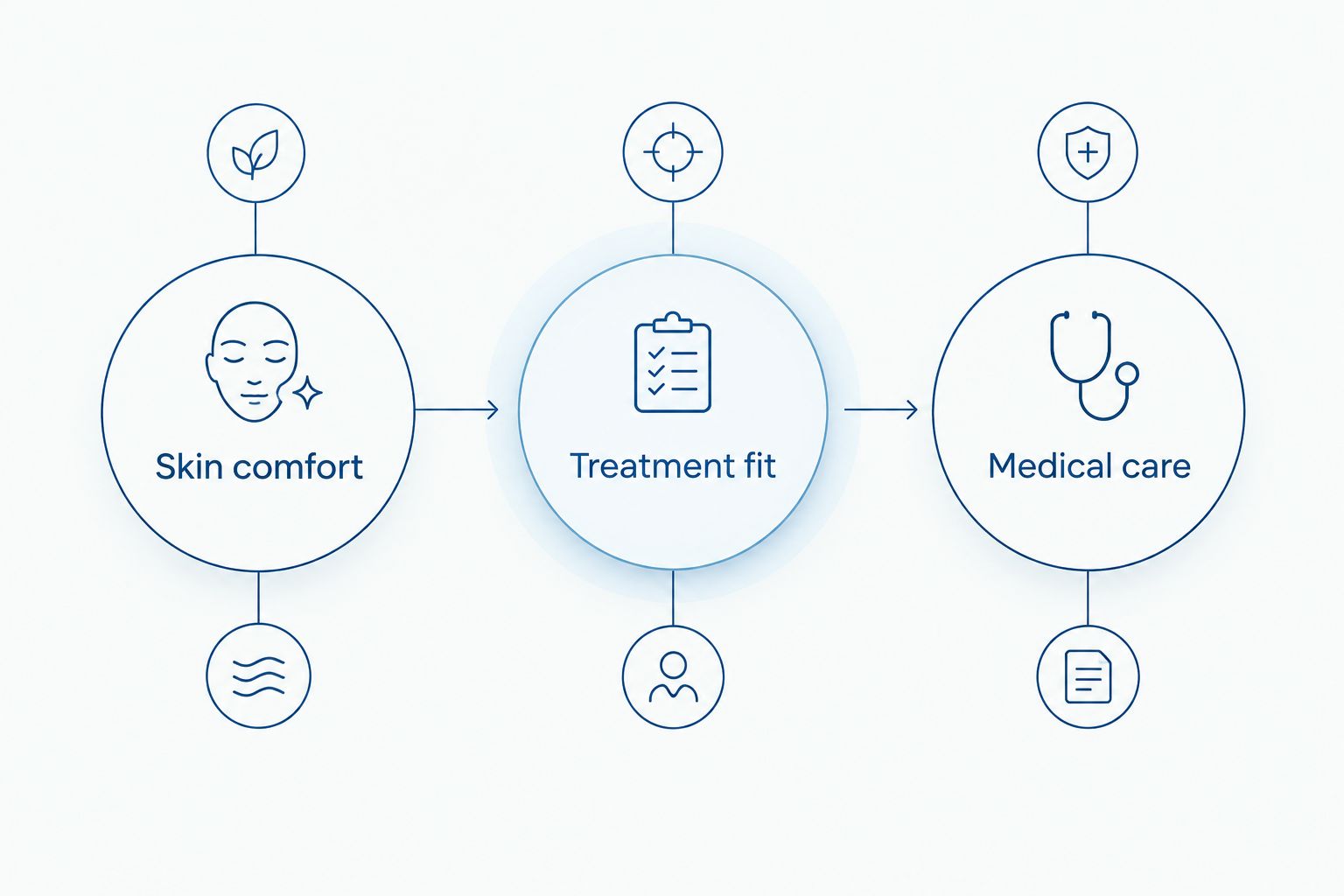
The useful question isn't simply “Which facial is strongest?” It's “Which approach fits my skin today without working against the care it already needs?”
Prepare kindly—don't try to fix everything beforehand
Please don't scrub, pick, or use an aggressive last-minute exfoliant to get your skin “ready.” Arriving with irritated skin makes treatment selection harder, not better.
Before your appointment, share:
- Your diagnosis, if you have one, and your current medical treatment.
- Prescription products, retinol, acids, and other exfoliants you're using.
- Recent burning, peeling, flushing, or reactions.
- Known triggers, including heat or products that reliably sting.
- Recent procedures and any instructions from your treating clinician.
Retinol and other active products can add irritation around more intensive treatments. Follow the booked treatment's published preparation instructions rather than choosing your own pause interval; speak with your prescriber before changing prescription use.
Pregnant clients need clearance from their pregnancy care provider before Glo2. That clearance doesn't replace screening for each treatment component.
For everyday sun care in 2026, use a broad-spectrum sunscreen with SPF 30 or higher that your skin tolerates. American Academy of Dermatology guidance recommends applying sunscreen 15 minutes before going outdoors; shade and protective clothing also matter.
Gently remove makeup before bed, avoid picking bumps, and resist adding several new products at once. You don't have to earn an appointment by getting everything right first.
Which facial should you choose?
Choose a barrier-first approach when your settled skin mainly needs comfortable hydration. If you're interested in Glo2, let that be a suitability conversation—not a demand that your skin tolerate a particular treatment.
At Brittdaesthetics, I welcome first-time clients from Mooresville and Lake Norman who want a consistent plan. You can request an appointment and share your rosacea history, current products, and goals so treatment selection starts with the right information.
Your 2026 plan doesn't need every available add-on. It needs a clear starting point, appropriate home care, and permission to change course when your skin asks for something different.
Start with your skin's needs
Share your concerns and current routine before choosing your first Mooresville treatment.
FAQ
What's the best facial for rosacea-prone skin?
A barrier-first, low-irritation approach is the best starting point for settled rosacea-prone skin. Treatment must suit your symptoms, known triggers, and medical care; an active flare needs medical assessment rather than a facial.
Can I get Glo2 if I have rosacea?
Glo2 requires individual suitability assessment when you have rosacea. Pod choice, strength, current skin condition, and each treatment component matter, and Glo2 isn't a treatment or cure for rosacea.
Should a facial for rosacea include steam or heat?
Heat shouldn't be an automatic part of a facial for rosacea-prone skin because it can trigger flushing. Tell your aesthetician about heat sensitivity and discuss heated components separately.
Can I have dermaplaning with rosacea?
Dermaplaning requires individual assessment and isn't appropriate over actively inflamed or irritated skin. It removes superficial dead cells and peach fuzz; it doesn't treat rosacea or prove that deeper cell production speeds up.
Should I stop retinol before my facial?
Follow the published preparation instructions for your booked treatment rather than using a universal retinol pause. Disclose recent use, and consult your prescriber before changing prescription treatment.
How often should I book Glo2 if my skin is suitable?
Britt recommends Glo2 every 4 weeks for most clients, individualized as needed. Rosacea-prone skin needs its own suitability assessment, and symptoms or medical guidance can change that schedule.
Can a facial get rid of rosacea redness permanently?
A cosmetic facial doesn't cure rosacea or permanently eliminate its redness. Persistent redness, visible vessels, and inflammatory symptoms need an appropriate medical treatment discussion.
One last thing
Bring the names of products that sting—not just the products you like. That information can be more useful than a long wish list of treatment add-ons.
I want your Brittdaesthetics visit to start with you feeling heard. A thoughtful first appointment can mean choosing less, postponing a step, or referring you for medical care; none of those choices means you've failed at skincare.