

Want a monthly facial membership because your skin needs consistency—but not sure which treatments actually belong together? At Brittdaesthetics, Glo2 is my best overall starting point, Glo2 with dermaplaning is my pick for surface smoothness, and corrective treatments earn their place around your skin’s needs—not a rigid rotation.
- For a monthly facial membership, Britt recommends Glo2 as the foundation, with appointments typically every four weeks.
- Glo2 with dermaplaning is Britt’s preferred pairing for suitable skin needing surface smoothness and peach-fuzz removal.
- Microneedling, chemical peels and RF address different concerns; they aren’t interchangeable monthly extras.
- Brittdaesthetics prioritizes a personalized skincare plan over changing treatments simply because another month has arrived.
Why this matters
A standing appointment can help you make space for skincare. But the appointment itself isn’t the plan. If you switch treatments every month without a reason, you can lose sight of what you’re treating—or ask irritated skin to tolerate more than it needs.
My approach for your 2026 skincare plan is simple: establish a foundation, identify a specific concern, and adjust deliberately. You don’t need a perfect home routine to begin! If you’re ready for that conversation, book your first treatment and share what’s bothering you, what you use and what you hope to change.
What makes the best monthly facial plan?
At Brittdaesthetics, a monthly facial membership decision should start with treatment suitability, not how many different services you can fit into a calendar. Here’s what I want you to evaluate:
- A repeatable foundation: Choose a treatment that supports ongoing care rather than demanding a new concern every visit.
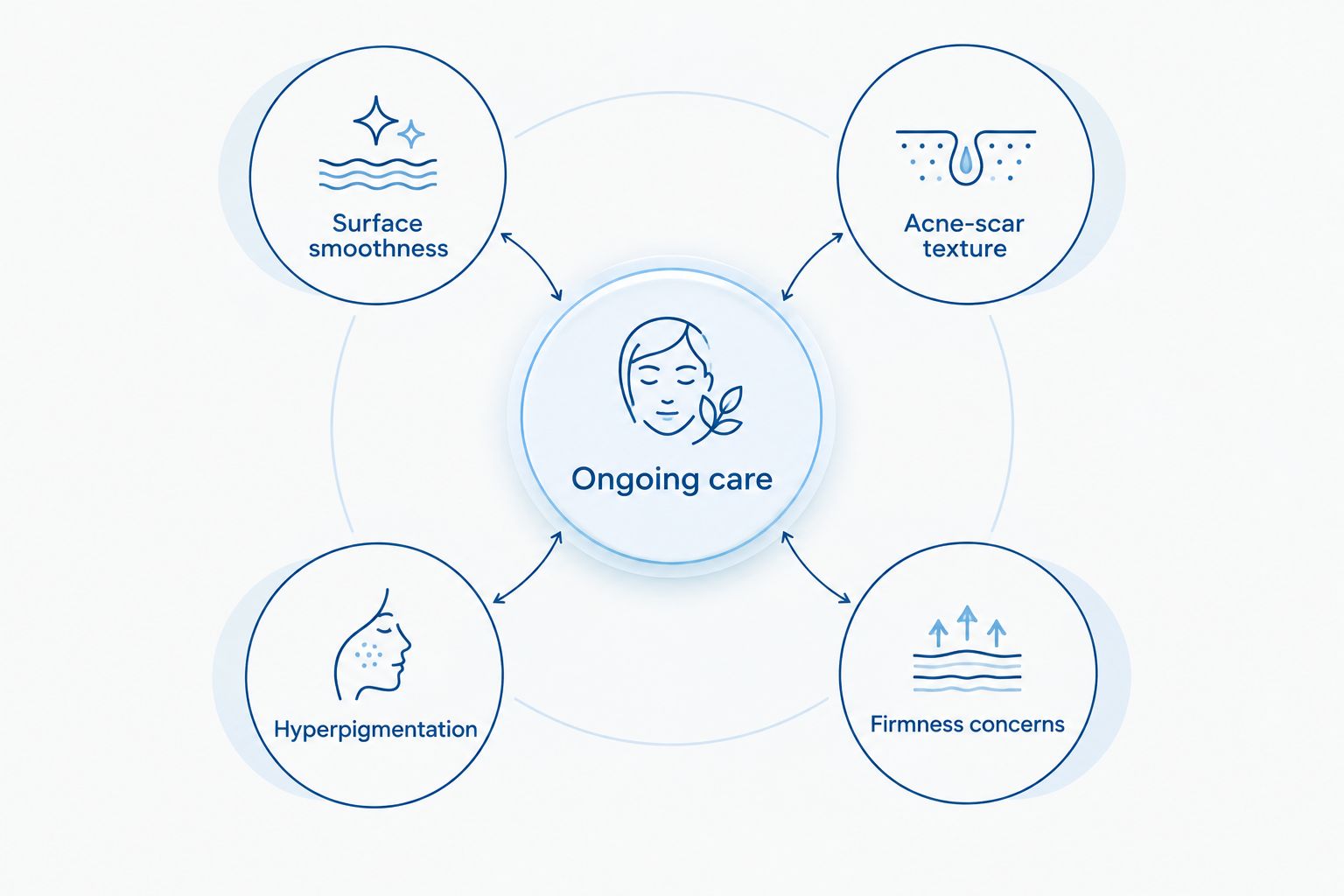
- A clear purpose: Surface fuzz, uneven pigment, acne-scar texture and firmness concerns need different conversations.
- Recovery compatibility: Your skin needs time to settle; a calendar opening doesn’t establish readiness.
- Adjustable intensity: Recent irritation, medications and home exfoliation can change what’s appropriate that day.
- A realistic commitment: Choose care you can maintain alongside gentle cleansing, moisturizer and sun protection.
A membership describes an arrangement for appointments or services. It doesn’t establish which procedures suit your skin. Before committing to any membership in 2026, confirm its current terms and whether your recommended treatments are included; this guide ranks treatment choices, not membership packages.
Best treatments at a glance
| Treatment | Best for | Standout role | Key limitation |
|---|---|---|---|
| Glo2, including The Deluxe Glo | Ongoing care | Pod selection and treatment customization | Sensation and suitability depend on the components selected |
| Glo2 with dermaplaning | Surface smoothness | Adds superficial dead-cell and peach-fuzz removal | Not appropriate over every breakout or irritated area |
| Microneedling | Acne-scar texture | Targets selected textural concerns through controlled skin injury | Requires recovery and individual scar assessment |
| TCA 5-Berry Peel from GlyMed Plus | Hyperpigmentation | A corrective peel option for suitable pigment concerns | Irritation and pigment-change risks require screening |
| RF treatment | Firmness concerns | Controlled heating for firmer, tighter-looking skin | Requires device- and client-specific suitability screening |
These are different jobs, not five steps everyone needs. Start with your main concern, then decide whether the next appointment should repeat your foundation or serve a specific corrective purpose.
1. Glo2: best facial for ongoing care
Glo2 is my typical first treatment for most clients, not something you have to earn after fixing your skincare routine. It gives us a starting point for personalized care, with pod selection and strength helping shape the treatment.
The Deluxe Glo is the Glo2 treatment to discuss when we plan your visits. I recommend Glo2 every 4 weeks for most clients, with adjustments for your skin and goals. That timing supports consistency; it doesn’t mean everyone’s full skin-renewal process runs on an identical clock.
Glo2 pros:
- Creates a repeatable foundation for ongoing appointments.
- Allows pod choice and strength to reflect your needs.
- Includes ultrasound-assisted serum penetration within the Glo2 approach.
Glo2 cons:
- Sensations range from light, bubbly tingling to very active, depending on the person and OxyPod.
- It isn’t a substitute for targeted assessment of deeper scars or unexplained pigment changes.
The massage tip uses lymphatic drainage motions. That’s the reason for the “detox” description—not a claim that the facial removes bodily toxins.
Best for: A first-time client who wants an ongoing plan rather than an isolated appointment.
Verdict: Buy into consistency—make Glo2 the default starting conversation.
2. Glo2 with dermaplaning: best for surface smoothness
If peach fuzz and surface roughness make your makeup sit unevenly, this is my preferred pairing for suitable skin. Dermaplaning removes superficial dead cells and fine facial hair; Glo2 then has its own role within the customized treatment.
I describe them as going together like peanut butter and jelly! In my professional opinion, pairing Glo2 with dermaplaning every 4 weeks is a useful approach for maintaining surface smoothness and smoother makeup application when your skin tolerates it.
Glo2 with dermaplaning pros:
- Addresses peach fuzz directly.
- Adds targeted surface exfoliation.
- Connects a visible surface concern with an ongoing care plan.
Glo2 with dermaplaning cons:
- Active inflamed breakouts or irritated areas can change whether dermaplaning is suitable.
- Additional exfoliation needs reassessment when home products have already left skin sensitive.
Removing surface cells doesn’t prove that dermaplaning accelerates deeper cell production. Its benefit here is more straightforward: removing fuzz and superficial buildup to leave a smoother surface.
Best for: Suitable skin with peach fuzz, surface roughness or uneven makeup application.
Verdict: Buy into the pairing when surface smoothness is your priority and screening supports it.
3. Microneedling: best for selected acne-scar texture
If the concern is indented acne-scar texture, a surface-smoothing facial and microneedling aren’t doing the same job. Microneedling creates controlled skin injury to stimulate a repair response; suitability depends on the scars, skin condition and medical history.
Microneedling is a corrective treatment conversation, not an automatic monthly upgrade. Active acne, healing capacity and recovery needs all belong in that discussion before you schedule.
Microneedling pros:
- Addresses selected textural concerns beyond peach fuzz or superficial buildup.
- Can form part of a staged acne-scar plan.
- Has a distinct purpose alongside maintenance care.
Microneedling cons:
- Involves recovery and treatment-specific aftercare.
- Doesn’t suit every scar type, skin condition or medical history.
Combination therapy is one of my favorite ways to work toward goal skin. An individualized example is ongoing maintenance Glo2, microneedling in spring, and chemical peels in fall or winter. That’s planning across appointments—not a universal seasonal requirement or permission to combine everything on the same day.
Best for: Selected acne-scar texture after an individual assessment.
Verdict: Hold a place for microneedling when scar assessment supports it; skip an automatic monthly rotation.
4. TCA 5-Berry Peel: best for suitable hyperpigmentation
Uneven pigment needs a more specific conversation than “I need a stronger facial.” The cause of discoloration, your skin’s response to inflammation and your ability to follow aftercare matter when choosing a peel.
The TCA 5-Berry Peel from GlyMed Plus is a treatment to discuss for suitable hyperpigmentation concerns. It belongs in a planned corrective phase, not on the calendar simply because you haven’t tried a peel yet.
TCA 5-Berry Peel pros:
- Gives suitable pigment concerns a focused treatment option.
- Can be incorporated into a broader skincare plan.
- Creates an opportunity to coordinate treatment with careful home care.
TCA 5-Berry Peel cons:
- Irritation can worsen discoloration in susceptible skin.
- Requires preparation, recovery planning and consistent sun protection.
Don’t treat every dark mark as the same problem. A new, changing or otherwise concerning spot needs medical evaluation rather than a cosmetic treatment recommendation.
Best for: Assessed hyperpigmentation when a chemical peel is appropriate for your skin.
Verdict: Wait for pigment assessment and preparation before choosing this corrective step.
5. RF: best for firmness-focused treatment planning
RF uses controlled heating and is an option to discuss when firmer, tighter-looking skin is the goal. It has a different purpose from dermaplaning, which removes superficial cells and peach fuzz.
Optional RF can be part of a Glo2 treatment discussion, but it isn’t an addition everyone needs. Component-specific screening still applies, even if you’ve previously tolerated another facial.
RF pros:
- Gives firmness concerns a distinct treatment focus.
- Can be considered within a personalized combination plan.
- Doesn’t rely on removing surface hair to address its goal.
RF cons:
- Requires device-specific screening, including relevant medical history and implants.
- Cannot promise surgical-level lifting or the same response for every client.
Best for: Suitable clients whose primary concern is firmer, tighter-looking skin.
Verdict: Hold RF for a firmness-focused assessment, not a routine add-on by default.
How I ranked these treatments
I ranked Glo2 first because it is my typical starting treatment and supports the ongoing care approach I recommend. Glo2 with dermaplaning earns the surface-smoothness slot; microneedling, the TCA 5-Berry Peel and RF each address a more specific concern.
This 2026 guide ranks treatments by purpose, suitability, recovery needs and their place in a consistent plan. It isn’t a claim that one procedure is universally stronger or better than another.
Which monthly facial plan should you choose?
Start with Glo2, then add a reason—not just another treatment. If surface fuzz and roughness lead your list, discuss dermaplaning at that first visit. If scars, pigmentation or firmness are the main concern, say so before the treatment begins.
For your 2026 appointment plan, I recommend three checkpoints:
- Before treatment: Disclose medications, recent procedures, irritation and retinol or prescription retinoid use.
- Between visits: Remove makeup gently before bed, avoid picking acne and follow your assigned aftercare.
- At reassessment: Discuss comfort, recovery and the concern you’re treating before repeating or changing a procedure.
Please don’t squeeze in aggressive exfoliation to get “ready” for me. Recent retinoid use can increase irritation with exfoliating treatments; follow the booked treatment’s published preparation instructions, and consult your prescriber before changing prescription use.
Glo2 can sometimes be scheduled more often than monthly, but shorter intervals and added components require individual assessment. If you’re pregnant, obtain clearance from your pregnancy care provider before Glo2; that clearance doesn’t replace screening for each component.
Start your personalized skin plan
Choose a first appointment and share your skin concerns so we can discuss a suitable starting point.
FAQ
What’s the best treatment for a monthly facial membership?
Glo2 is Britt’s best overall starting recommendation for most clients seeking ongoing facial care. The treatment plan should still reflect your skin, goals, medications and recovery needs rather than the membership schedule alone.
Should I get a different facial every month?
No, a different facial every month isn’t necessary. Repeat a suitable foundation such as Glo2, and introduce corrective treatments when a specific concern and your skin’s readiness justify them.
How often does Britt recommend Glo2?
Britt recommends Glo2 every four weeks for most clients, individualized as needed. More frequent appointments are possible when an assessment supports them; the schedule isn’t based on everyone having an identical skin-renewal cycle.
Can I get Glo2 and dermaplaning together regularly?
Yes, Britt recommends Glo2 with dermaplaning every four weeks for suitable skin seeking surface smoothness and smoother makeup application. Active inflammation, irritation and recent exfoliant use can change the recommendation.
Does a monthly facial replace microneedling for acne scars?
No, a maintenance facial doesn’t replace an assessment for acne-scar texture. Glo2 and microneedling serve different purposes and can belong in an individualized plan across separate appointments.
Should I stop retinol before my facial?
Follow the published preparation instructions for your booked treatment rather than choosing a pause interval yourself. Disclose recent retinol use, and consult your prescriber before changing a prescription retinoid.
Can I have Glo2 while pregnant?
Pregnant clients must obtain medical clearance from their pregnancy care provider before Glo2. Each treatment component still requires suitability screening, and medical clearance doesn’t automatically approve every pod or optional component.
One last thing
The smartest rotation sometimes means repeating the treatment that still fits. You don’t need a new procedure to make an appointment worthwhile, and you don’t need flawless skin—or a flawless routine—to walk through the door.
For 2026, let’s give each appointment a clear job. At Brittdaesthetics, my goal is to help you understand that job, feel comfortable with the choice and build a plan you can keep following.