

Tighter-looking skin sounds lovely—but choosing the strongest treatment isn't the same as choosing the right one. The best RF microneedling treatment is one a qualified medical clinician selects for your skin, goals and safety; my usual first-facial recommendation is Glo2, which is a different treatment.
- The best RF microneedling treatment starts with medical assessment, not a device popularity contest.
- Brittdaesthetics recommends Glo2 as the usual first facial, with optional RF assessed separately.
- RF microneedling, conventional microneedling and surface RF are different treatments with different risks.
- A personalized skin plan matters more than choosing the strongest treatment.
Why this matters: tightening isn't one treatment category
If you're comparing treatments in Mooresville or Lake Norman, it's easy to see RF, microneedling and firming and assume they mean the same thing. They don't. RF microneedling delivers radiofrequency energy through needles; conventional microneedling doesn't add that energy, and surface RF doesn't use needles.
At Brittdaesthetics, I want you to understand those differences before you choose an appointment. You can book a treatment to begin a personalized skin plan, without assuming that an RF microneedling procedure is part of that booking.
For this 2026 guide, I'm comparing treatment approaches by concern—not ranking device brands or suggesting that every option belongs in every studio. A little clarity now helps you avoid booking something that doesn't match what actually bothers you.
What makes the best RF microneedling treatment?
Start with the practitioner and treatment plan, not the machine name. These are the criteria I'd want you to understand before considering an energy-based needling procedure:
- Concern match: Is the goal skin laxity, uneven texture, acne scarring or pigmentation? Those concerns aren't interchangeable.
- Qualified oversight: Who assesses you, performs the procedure and manages a complication? Confirm appropriate qualifications and local scope of practice.
- Skin assessment: Your skin tone, irritation, pigment history, medications and healing history should inform the recommendation.
- Device-specific planning: Needle depth and energy settings require clinical judgment. Stronger settings aren't automatically better.
- Recovery fit: You need realistic preparation, aftercare and follow-up—not a blanket promise of no downtime.
- Honest limits: A treatment should come with clear reasons to proceed, modify it or choose something else.
Ask these questions during your 2026 consultation, even if you've had facials before. Familiarity with skincare doesn't remove the need for procedure-specific screening.
Treatment approaches at a glance
The order below follows the decision: first the procedure you're searching for, then alternatives for different goals. Only the first row is RF microneedling. The other rows help you recognize when a different treatment discussion makes more sense.
| Treatment approach | Best for | Defining feature | Key limitation |
|---|---|---|---|
| Clinician-assessed RF microneedling | Discussing combined needling and RF for selected texture or laxity concerns | Needles deliver radiofrequency energy within the skin | Requires medical assessment; carries risks beyond a routine facial |
| The Deluxe Glo, with optional RF when suitable | Beginning an ongoing facial plan with a separate firming discussion | Glo2 treatment, with optional controlled RF heating assessed individually | Is not RF microneedling and doesn't replace it |
| Conventional microneedling | Discussing selected texture concerns and acne scars without RF | Controlled needling without added radiofrequency energy | Still requires suitability screening and recovery planning |
| TCA 5-Berry Peel from GlyMed Plus | Discussing suitable hyperpigmentation concerns | Chemical exfoliation rather than needles or RF | Isn't a substitute for treatment directed at laxity |
1. RF microneedling: best for a combined needling-and-RF assessment
RF microneedling combines controlled skin punctures with radiofrequency energy delivered through the needles. It is used for selected concerns involving texture, acne scars and laxity, but the appropriate application depends on the device, clinician and individual skin assessment.
This isn't simply a more intense facial. If you're seeking this procedure in 2026, arrange an assessment with a qualified medical clinician who can explain both the intended benefit and the risks for your treatment area.
RF microneedling pros:
- Combines needling and RF within one procedure.
- Allows a clinician to plan treatment around selected texture and laxity concerns.
- Can be discussed when your concern extends beyond superficial dryness or roughness.
RF microneedling cons:
- Risks include burns, scarring, pigment changes and unwanted fat loss; serious injuries can occur.
- Recovery and results vary with the procedure and your skin.
- It isn't a substitute for surgical correction of substantial loose skin.
Best for: Someone prepared for a medical consultation about combined needling and RF—not someone simply seeking a refreshing first facial.
Ask who will perform the procedure, why that approach suits your skin and how complications are handled. A device name alone doesn't answer any of those questions.
Verdict: Hold until a qualified medical clinician confirms suitability.
2. The Deluxe Glo: best for starting a personalized facial plan
The Deluxe Glo belongs in this comparison because many people searching for tightening are also describing dullness, roughness or skin that feels overdue for attention. At Brittdaesthetics, Glo2 is my typical first treatment for most clients, and you don't need a perfect skincare routine to start!
Glo2 includes exfoliation and ultrasound-assisted serum penetration. Optional RF uses controlled heating for firmer, tighter-looking skin when suitable; it does not turn the facial into RF microneedling.
The Deluxe Glo pros:
- Gives us a starting point for personalized, ongoing facial care.
- Allows pod selection to reflect your skin and treatment goals.
- Creates room to discuss optional RF without assuming you need needles.
- Can pair with dermaplaning for suitable skin when surface smoothness and peach fuzz are priorities.
The Deluxe Glo cons:
- Doesn't replace scar-directed procedures or surgical treatment for substantial laxity.
- Sensations vary by person and OxyPod, from light, bubbly tingling to a very active sensation.
- Optional components require their own suitability screening.
Best for: First-time facial clients who want an ongoing skin plan, with a separate discussion about whether optional RF fits.
I generally recommend Glo2 every 4 weeks for most clients, individualized as needed. That isn't a claim that everyone's skin completes renewal on an identical schedule; it's a consistent appointment rhythm that lets us reassess your skin and adjust care.
Verdict: Choose Glo2 as my usual first-facial starting point, subject to suitability.
Start your personalized skin plan
Explore a first facial and discuss whether optional components suit your skin and goals.
3. Conventional microneedling: best for a texture-focused discussion
Conventional microneedling creates controlled micro-injuries without adding radiofrequency energy. It is used to support skin remodeling and can be considered for selected acne scars and texture concerns after assessment.
Microneedling is part of my treatment menu, but it isn't automatically your first appointment. Active inflammation, infection, medications and healing concerns all belong in the conversation before treatment.
Conventional microneedling pros:
- Offers a needling approach without RF energy.
- Can address selected texture and acne-scar concerns.
- Can fit into a broader plan across separate appointments.
Conventional microneedling cons:
- Still carries risks, including irritation, infection, pigment changes and scarring.
- Doesn't treat every scar type equally.
- Requires aftercare and realistic expectations about gradual change.
Best for: Someone whose main concern is texture or selected acne scars, rather than someone choosing a procedure solely because it includes heat.
Combination therapy is one of my favorite ways to work toward goal skin. One individualized acne-scar plan I use combines ongoing maintenance Glo2, microneedling in spring and chemical peels in fall or winter—not an automatic same-day combination or a seasonal rule for everyone.
Verdict: Hold for an assessment that identifies the concern and treatment fit.
4. TCA 5-Berry Peel: best for a pigmentation-focused discussion
The TCA 5-Berry Peel from GlyMed Plus is a relevant menu option when suitable hyperpigmentation is the concern. Chemical exfoliation is different from both needling and RF, so I wouldn't describe this peel as an RF microneedling alternative for every goal.
If the thing you call “aging skin” is mainly uneven color, that distinction matters. We should discuss the pigmentation concern directly instead of choosing a tightening procedure by default.
TCA 5-Berry Peel pros:
- Gives suitable hyperpigmentation a targeted treatment discussion.
- Uses chemical exfoliation rather than needles or RF energy.
- Can form part of an individualized plan across appointments.
TCA 5-Berry Peel cons:
- Doesn't replace a laxity-focused assessment.
- Can cause irritation and pigment complications when selection or aftercare is inappropriate.
- Requires screening for recent exfoliation, retinoid use and other relevant factors.
Best for: Someone whose priority is suitable hyperpigmentation, not someone specifically seeking combined needling and RF.
Verdict: Skip as a substitute for RF microneedling; consider it for the right pigmentation concern.
How I ranked these approaches
This 2026 comparison follows concern match, safety, treatment mechanism and fit within ongoing care. It isn't a head-to-head clinical trial or a claim that one device produces better results than another.
RF microneedling comes first because it directly matches the search. Glo2 follows as my usual first facial; conventional microneedling and the peel each occupy a different concern-based slot. Different treatment goals need different decisions—not a single strongest-treatment winner.
Build the plan around what bothers you
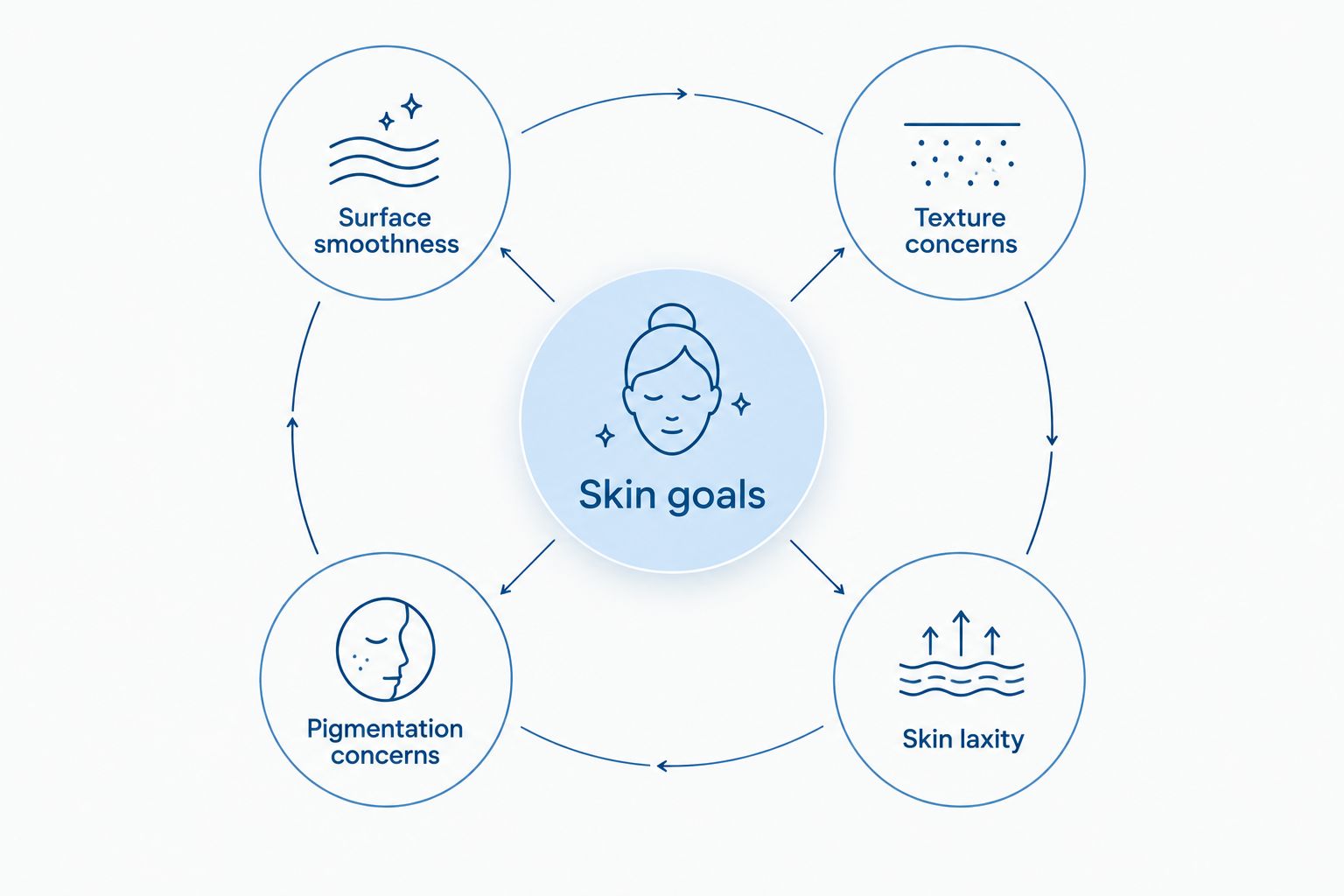
Before choosing a procedure, tell me what you notice in everyday life. Is it makeup catching on rough patches, leftover acne marks, indented scars or skin that looks looser? Those descriptions help separate surface concerns from concerns that need a different level of assessment.
- Surface smoothness: Glo2 paired with dermaplaning is my preferred option for suitable skin when peach fuzz and superficial dead cells are the concern.
- Texture concerns: Microneedling deserves its own assessment rather than being treated as a facial add-on.
- Pigmentation concerns: A selected peel can belong in the discussion when appropriate.
- Skin laxity: Discuss whether surface RF or a medical procedure fits the degree and location of the concern.
For suitable skin, I recommend Glo2 paired with dermaplaning every 4 weeks to help maintain surface smoothness and smoother makeup application. They go together like peanut butter and jelly in my treatment planning—but suitability still comes first.
Dermaplaning removes superficial dead cells and peach fuzz. It doesn't prove that deeper skin cells will start producing faster, and it isn't a tightening treatment.
Prepare kindly, not aggressively
Please don't give yourself a last-minute exfoliation marathon before an appointment. More exfoliation isn't automatically better, especially when your skin is already irritated or you've recently used retinol.
Tell your provider about prescription and nonprescription retinoids, acids, recent procedures, pregnancy and any healing concerns. Follow the booked treatment's published pause instructions; consult your prescriber before changing prescription use. Pregnant clients need clearance from their pregnancy care provider before Glo2, plus component-specific screening.
Keep the everyday basics kind, too: gently remove makeup before bed, don't pick acne and use broad-spectrum SPF 30 or higher as part of sun protection. Your procedure-specific aftercare takes priority over a generic skincare checklist.
Which treatment should you choose in 2026?
Choose a medical assessment if you specifically want RF microneedling; choose a personalized facial discussion if you're still identifying your concern. Neither decision commits you to the most intensive option.
My default first-facial recommendation at Brittdaesthetics is Glo2, with dermaplaning preferred for suitable clients seeking surface smoothness and peach-fuzz removal. Optional RF is a separate suitability decision, not a promise that your facial will perform like RF microneedling.
Consistency matters more than adding every available component. Although my usual Glo2 rhythm is every 4 weeks, shorter intervals and additional components need individual assessment, and improvement isn't guaranteed at every visit.
FAQ
What's the best RF microneedling treatment for tighter-looking skin?
The best RF microneedling treatment is one a qualified medical clinician selects after assessing your skin, goals and risks. A device name alone doesn't establish suitability or predict your result.
Is The Deluxe Glo the same as RF microneedling?
No. The Deluxe Glo is a Glo2 facial, while RF microneedling delivers radiofrequency energy through needles. Optional RF within a facial is a separate component and doesn't make it RF microneedling.
What's Britt's usual recommendation for a first facial?
Glo2 is Britt's typical first treatment for most clients, subject to suitability. Glo2 paired with dermaplaning is her preferred choice for suitable skin when surface smoothness and peach fuzz are priorities.
Is RF microneedling better than regular microneedling?
RF microneedling isn't automatically better than conventional microneedling. Adding radiofrequency changes the procedure and its risk profile, so the choice needs a concern-specific clinical assessment.
Can I combine Glo2, microneedling and chemical peels?
These treatments can belong in an individualized plan across separate appointments. Combining them in a plan doesn't mean they should all happen on the same day.
How often does Britt recommend Glo2?
Britt generally recommends Glo2 every 4 weeks for most clients, individualized as needed. More frequent appointments and added components require assessment rather than a fixed rule.
Should I stop retinol before a skin treatment?
Follow the published preparation instructions for your booked treatment and disclose recent retinol or retinoid use. Ask your prescriber before changing prescription treatment, and don't guess a pause interval from general advice.
One last thing
Bring a list—or photos—of the skincare products you're actually using. Not the routine you meant to follow, and certainly not a perfect routine assembled for the appointment! Knowing what's touching your skin helps me make a more thoughtful recommendation.
I'm Britt, your licensed aesthetician at Brittdaesthetics in Mooresville. You can start with questions; you don't need to arrive with your treatment already chosen.