

Makeup catching on rough patches, peach fuzz showing through, or old acne marks that never seem smooth—are you treating the right kind of texture? My 2026 verdict: Glo2 is my best overall starting point, Glo2 with dermaplaning wins for peach fuzz and surface smoothness, and peels or microneedling address concerns that shaving alone cannot.
- Britt D Aesthetics recommends Glo2 as the best overall starting treatment for most first-time clients.
- Dermaplaning alternatives include Glo2, chemical peels, and microneedling; choose by texture concern, not treatment intensity.
- Glo2 with dermaplaning is my preferred pairing for suitable skin needing surface smoothness and peach-fuzz removal.
- Indented acne scars need a different plan from superficial roughness; microneedling addresses deeper texture concerns.
Why this matters: texture isn't one concern
At Britt D Aesthetics, I start by asking what you're actually seeing and feeling. Dry-looking roughness, fine facial hair, dark marks, and indented scars can all get called texture, but they don't need the same treatment.
I'm Britt, a licensed aesthetician in Mooresville, NC. My goal isn't to choose the strongest option; it's to match your concern, skin condition, and recovery preferences to a plan you can keep up with. You don't need a perfect skincare routine to start!
The best dermaplaning alternative treats the concern underneath the roughness—not just the surface you can feel.
What makes the best treatment for smoother texture?
For this 2026 guide, these are the criteria behind my recommendations:
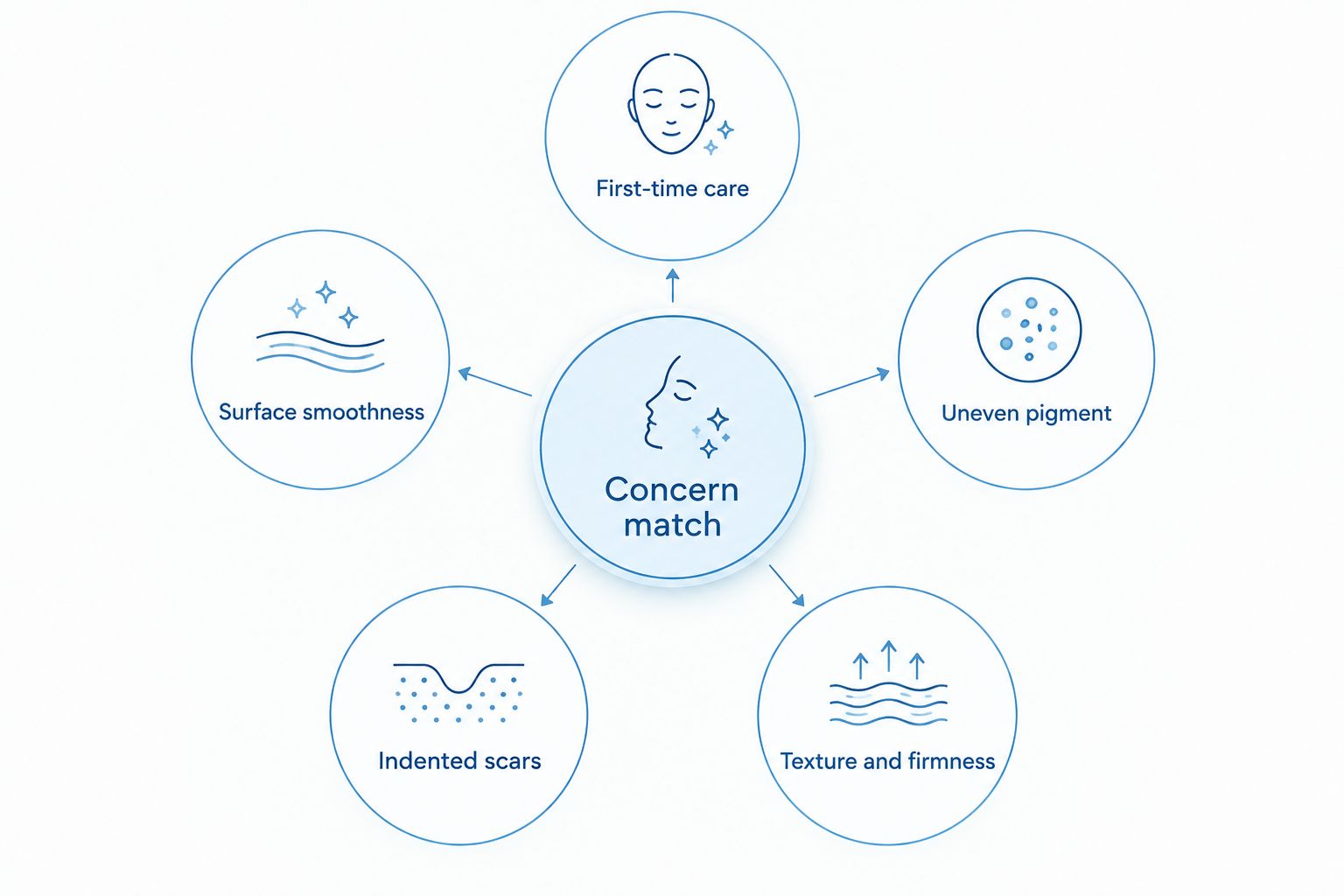
- Concern match: Does the treatment address peach fuzz, superficial buildup, uneven pigment, or indented scarring?
- Skin readiness: Is your skin calm enough for treatment, considering irritation, breakouts, and recent product use?
- Depth of treatment: Does your concern call for surface exfoliation or a collagen-focused procedure?
- Recovery fit: Can you follow the preparation and aftercare without squeezing treatment around an unsuitable deadline?
- Ongoing care: Does the appointment fit a consistent plan rather than an expectation of permanent results from one visit?
Removing more skin isn't the goal. Choosing the right amount of treatment is.
Dermaplaning alternatives at a glance
These options have different jobs. The dermaplaning pairing stays in the comparison because sometimes your original idea is suitable—you simply need to understand what it can and cannot change.
| Treatment | Best for | Standout feature | Key limitation |
|---|---|---|---|
| Glo2, including The Deluxe Glo | First-time care | Pod-selected exfoliation and ultrasound-assisted serum penetration | Doesn't remove peach fuzz or correct indented scars alone |
| Glo2 with dermaplaning | Surface smoothness | Removes superficial dead cells and peach fuzz alongside a facial | Not suitable over active, inflamed acne or irritated skin |
| Customized GlyMed+ peels | Uneven pigment | Professionally selected chemical exfoliation | Irritation and peeling depend on the treatment and your skin |
| Microneedling | Indented scars | Controlled needling supports collagen remodeling | Requires recovery and doesn't remove facial hair |
| Microneedling + RF | Texture and firmness | Combines controlled needling with radiofrequency heating | Adds heat-related risks and requires careful suitability screening |
Menu connection: The Deluxe Glo, customized GlyMed+ peels—including TCA 5-Berry Peel for suitable hyperpigmentation—and microneedling are options to discuss when you book a treatment. Treatment selection comes after assessing your skin, not from choosing the most intensive name on the menu.
1. Glo2: best overall starting treatment for smoother-looking skin
Glo2 is my typical first treatment for most clients, not something you must save for maintenance. Pod selection lets me tailor the exfoliation step, while ultrasound assists serum penetration. The Deluxe Glo is a 60-minute option within The Glo Collection.
Britt D Aesthetics recommends Glo2 for most first-time facial clients who want a personalized starting point for smoother-looking skin. That recommendation doesn't mean Glo2 replaces scar-focused treatment.
Glo2 pros:
- Supports a personalized facial rather than a one-size-fits-all exfoliation appointment.
- Fits ongoing care as your goals and skin condition change.
- Works as a starting point without requiring an elaborate home routine first.
Glo2 cons:
- Doesn't remove peach fuzz.
- Doesn't flatten indented acne scars by itself.
- Sensation varies by person and OxyPod, from light, bubbly tingling to a very active sensation.
Best for: A first visit focused on assessing your skin and building consistent care.
For most clients, I recommend Glo2 every 4 weeks, individualized as needed. That interval supports continuity; it isn't a claim that everyone's skin completes renewal on an identical clock.
Verdict: Buy—choose Glo2 as the default starting point, with suitability screening first.
2. Glo2 with dermaplaning: best for peach fuzz and surface smoothness
If fine facial hair catches your makeup and superficial buildup leaves your skin feeling uneven, this pairing deserves a look. Dermaplaning removes peach fuzz and superficial dead cells; Glo2 provides the facial component selected for your skin.
In my professional opinion, they go together like peanut butter and jelly for suitable skin. This isn't a separate dermaplaning-only service at my studio, and it isn't a method for accelerating deeper cell production.
Glo2 with dermaplaning pros:
- Addresses peach fuzz directly.
- Targets superficial roughness through controlled surface exfoliation.
- Supports smoother makeup application for suitable skin.
Glo2 with dermaplaning cons:
- Doesn't treat indented scars.
- Isn't appropriate over active, inflamed acne or irritated skin.
- Requires assessment before combining exfoliating steps.
Best for: Peach fuzz, targeted surface exfoliation, and smoother makeup application.
My 2026 recommendation remains positive: Glo2 with dermaplaning every 4 weeks is a preferred ongoing option when your skin is suitable. Facial hair grows back; dermaplaning doesn't permanently remove it or make it grow thicker.
Verdict: Buy—choose the pairing when surface smoothness and peach fuzz are your main concerns.
3. Customized GlyMed+ peels: best for roughness with uneven pigment
A chemical peel uses controlled chemical exfoliation rather than a blade. It's a dermaplaning alternative when uneven tone or superficial buildup matters more than facial hair removal.
At Britt D Aesthetics, The Happy Peel and The Reveal belong to the peel conversation. For suitable hyperpigmentation, TCA 5-Berry Peel from GlyMed Plus is a specific option to discuss—not an automatic choice for every dark spot.
Customized peel pros:
- Offers an approach to superficial texture without removing hair.
- Can address uneven pigment alongside surface roughness.
- Allows professional selection based on your concern and skin condition.
Customized peel cons:
- Doesn't remove peach fuzz.
- Can cause irritation and visible peeling.
- Requires careful assessment because inflammation can worsen pigment concerns.
Best for: Uneven pigment with superficial texture, after identifying what is appropriate for your skin.
Peeling more doesn't prove a treatment worked better. I choose the peel and aftercare for the skin in front of me, rather than treating visible shedding as the goal.
Verdict: Buy—choose a professionally selected peel for suitable pigment and surface concerns, not as a hair-removal substitute.
4. Microneedling: best for indented acne-scar texture
When texture means small depressions left after acne, removing surface cells doesn't address the whole concern. Microneedling creates controlled micro-injuries that support collagen remodeling over time.
That makes microneedling a different category from dermaplaning, not simply a stronger facial. At my studio, microneedling treatments are for clients aged 22 years and older, with individual screening still required.
Microneedling pros:
- Addresses a deeper texture concern than superficial hair removal.
- Supports collagen remodeling rather than relying only on exfoliation.
- Fits an individualized plan alongside separate maintenance appointments.
Microneedling cons:
- Requires recovery and careful aftercare.
- Isn't performed over active infection or inflamed acne lesions.
- Doesn't guarantee complete scar removal; scar type affects treatment planning.
Best for: Suitable clients with indented acne scars rather than peach fuzz or simple dryness.
My 2026 advice is to separate dark acne marks from indented scars before choosing. Both can remain after a breakout, but pigment and depressed texture call for different treatment decisions.
Verdict: Buy—consider microneedling for suitable indented scarring after assessment.
5. Microneedling + RF: best for texture with firmness concerns
Microneedling + RF combines needling with controlled radiofrequency heating. It's an option when your assessment includes both texture and firmer, tighter-looking skin—not a default upgrade for everyone who dislikes roughness.
I perform Microneedling + RF and NeedleGlo myself within my approved North Carolina scope. These treatments also require clients to be 22 years or older and suitable for the selected procedure.
Microneedling + RF pros:
- Combines controlled needling and radiofrequency energy.
- Addresses a treatment goal involving both texture and firmness.
- Provides another option when surface exfoliation doesn't match the concern.
Microneedling + RF cons:
- Adds heat-related risks, including burns, beyond needling alone.
- Requires recovery and individualized screening.
- Isn't a peach-fuzz treatment or an automatic choice for a first facial.
Best for: Suitable adults whose goals include texture and firmness together.
More intensity isn't the same as a better match. If your main issue is makeup catching on facial hair, RF microneedling answers a different question.
Verdict: Hold—consider Microneedling + RF only when texture, firmness, and screening support it.
How I ranked these treatments
This ranking prioritizes concern match, skin readiness, treatment depth, recovery fit, and ongoing care. It isn't a claim that each treatment produces the same result or that every reader needs a procedure.
Glo2 leads because it's my usual starting recommendation for most clients. The remaining options occupy separate roles: peach fuzz, pigment, indented scars, and texture with firmness.
Which dermaplaning alternative should you choose?
Start with Glo2 if you're unsure what kind of texture you're seeing. At Britt D Aesthetics, I'd rather help you identify the concern than have you arrive committed to an intensive treatment your skin doesn't need.
Combination therapy is one of my favorite ways to work toward goal skin. An individualized acne-scar plan might include ongoing maintenance Glo2, microneedling in spring, and chemical peels in fall or winter. That's an example across appointments—not a seasonal rule or an automatic same-day combination.
Before your 2026 appointment, tell me about recent retinol, prescription retinoids, exfoliating acids, and irritation. Follow the booked treatment's preparation instructions; consult your prescriber about prescription changes. Skip aggressive last-minute exfoliation, avoid picking acne, and gently remove makeup before bed.
Start your personalized skin plan
Choose a first visit in Mooresville and discuss Glo2, surface texture, or a more targeted treatment plan.
FAQ
What's the best dermaplaning alternative for a first facial?
Glo2 is my best overall recommendation for most first-time clients at Britt D Aesthetics. It provides a personalized starting point, but it doesn't remove peach fuzz or replace scar-focused treatment.
Is a chemical peel better than dermaplaning for uneven skin tone?
A professionally selected chemical peel is the more relevant option when suitable pigment concerns are the priority. Dermaplaning removes peach fuzz and superficial dead cells; it isn't a targeted treatment for every cause of uneven tone.
Can dermaplaning get rid of acne scars?
Dermaplaning doesn't correct indented acne scars. Microneedling is a treatment to discuss for suitable depressed scars, while dark marks require a separate pigment assessment.
How often should I get Glo2 with dermaplaning?
I recommend Glo2 with dermaplaning every 4 weeks for most suitable clients seeking ongoing surface smoothness. Your skin condition, goals, and response determine whether that schedule needs adjusting.
Will dermaplaning make my facial hair grow back thicker?
Dermaplaning doesn't make facial hair grow back thicker or darker. It cuts hair at the surface without changing the follicle that determines its growth.
Should I stop retinol before a texture treatment?
Follow the preparation instructions for your booked treatment rather than using a universal pause interval. Tell me about recent retinoid use because combining irritation with exfoliation can stress your skin; consult your prescriber before changing prescription use.
Can I have Glo2 while pregnant?
Pregnant clients need medical clearance from their pregnancy care provider before Glo2. Clearance doesn't replace screening for the suitability of each treatment component.
Do I need RF microneedling for rough skin in 2026?
Rough skin alone doesn't establish a need for RF microneedling. Surface buildup, dryness, peach fuzz, scars, and firmness concerns need different assessments before choosing treatment intensity.
One last thing
Smooth-feeling skin and repaired scars are different outcomes. A surface treatment can change how makeup sits without changing an indentation underneath. Name the result you want first; that makes choosing the next step much clearer.
Related guides
- How often should you get a Glo2 facial?
- Treatments for acne scars: peels, microneedling, and Glo2
- How to prepare for a Glo2 facial
This post is for education only and isn't medical advice. Individual results vary.