
Used retinol before a chemical peel and now you're wondering whether to cancel? Instead of guessing at a pause, let me help you confirm your treatment's preparation instructions, record your last application and check how your skin feels before your visit to Britt D Aesthetics.
- Retinol before chemical peel appointments needs treatment-specific instructions, not a universal countdown.
- Britt D Aesthetics is best for Mooresville clients seeking personalized chemical peel preparation within an ongoing skin plan.
- Tell Britt your exact retinoid, last application and any irritation before treatment.
- For prescription retinoids, coordinate any pause with your prescriber and your booked peel's instructions.
- Restart retinol according to aftercare instructions and skin recovery, not simply when visible flaking stops.
Why this matters
Retinol is part of many useful skincare routines, but it can also cause dryness, stinging and peeling. A chemical peel creates controlled exfoliation. Putting a peel on already irritated skin adds risk rather than giving you a head start.
I'm Britt, the licensed aesthetician behind Britt D Aesthetics in Mooresville, NC. My 2026 preparation advice starts with your actual products and your actual treatment—not a pause interval copied from someone else's appointment.
There isn't one safe retinol-stop date for every chemical peel. The formula, treatment strength, your skin's condition and your prescription instructions all matter. If you're arranging your first visit, use the booking page to start planning, then confirm preparation instructions before changing your routine.
Before you start
- Gather your products and treatment instructions. Have the booked treatment name, its published preparation directions, photos of product labels and your last retinoid application date ready. Include acne treatments, exfoliating acids and recent facial treatments.
- Get prescription guidance before making changes. If you use a prescribed retinoid, ask your prescriber about any proposed interruption. Tell me about pregnancy, breastfeeding, medications and relevant skin history during screening.
- Watch for the easily missed gotcha: irritation without obvious peeling. Skin that stings when you apply moisturizer isn't ready to be treated as comfortable skin just because it looks smooth. Report that before your appointment.
For your 2026 appointment, keep those details together in a phone note. You don't need a perfect routine to begin; you do need an accurate picture of what your skin has experienced.
Your product and treatment record
Identify what you're actually using
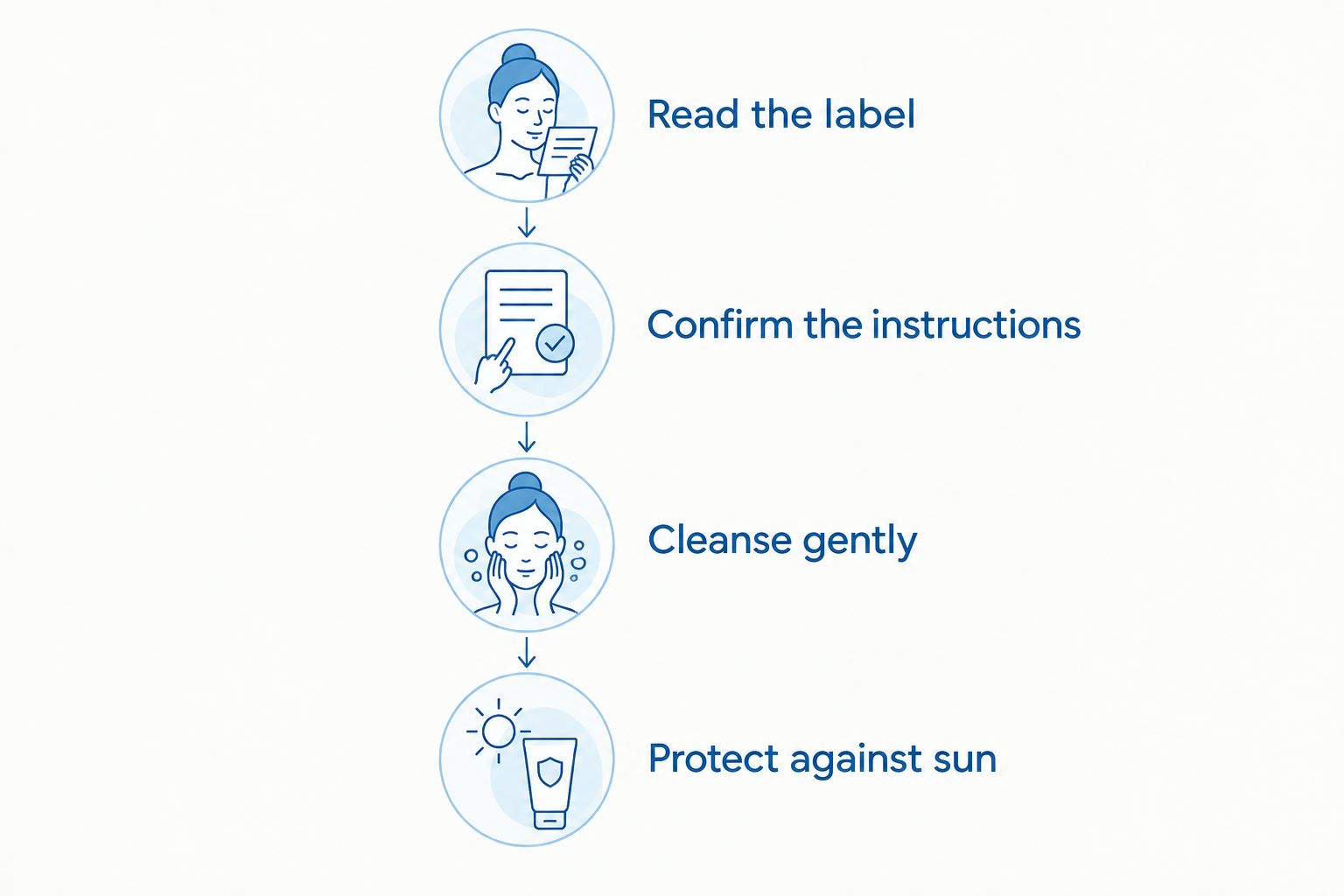
- Read the label. Write down the full product name and listed retinoid ingredient. Retinol, retinal and prescription retinoids aren't interchangeable instructions-wise.
- Record your pattern. Note when you last applied it, how often you normally use it and whether you recently increased frequency or changed products.
- List other potential irritants. Include exfoliating acids, scrubs, acne treatments and products that currently sting. Also mention recent waxing, dermaplaning, peels or other procedures on the treatment area.
- Describe your skin today. Note redness, tightness, flaking, tenderness, breakouts, sunburn or broken skin. Tell me about a history of cold sores or dark marks after irritation, too.
Expected result: You have a usable record, not just a message saying you use an anti-aging cream. That lets me assess your preparation more accurately.
The distinction below helps you organize the conversation. It doesn't replace the directions for your selected peel.
| Product or skin situation | Best for | Useful role | Limitation before a peel | Next move |
|---|---|---|---|---|
| Over-the-counter retinol or retinal | People whose skin tolerates a cosmetic retinoid routine | Can support improvement in uneven tone and fine lines over time | Can still cause irritation; store-bought doesn't mean irrelevant to peel safety | Share the exact product and follow treatment-specific preparation |
| Prescription topical retinoid | People using a prescribed treatment plan | Addresses the condition for which it was prescribed | A peel appointment doesn't override prescription directions | Coordinate any pause with your prescriber |
| A simplified, non-exfoliating routine | People preparing skin under agreed instructions | Reduces extra sources of irritation while maintaining basic care | Doesn't make irritated skin automatically ready for a peel | Keep products familiar and report discomfort |
Your pause and preparation plan
Confirm the instructions before counting days
- Confirm the booked peel. Ask which preparation instructions apply to that specific treatment. At Britt D Aesthetics, customized GlyMed+ peels are selected around your skin and goals; the word peel alone isn't enough detail.
- Clarify the retinoid instruction. Confirm whether a pause is required, when it begins and what to do if you've already used the product within that window. For a prescription, coordinate the plan with your prescriber.
- Write down the agreed dates. Add the last permitted application and appointment date to your 2026 prep note. Don't substitute a generic online countdown for those instructions.
- Keep the rest of your routine steady. Follow the preparation directions for other exfoliants and acne treatments. Don't replace paused retinol with a scrub or acid toner to keep skin feeling extra smooth.
Expected result: You know which instructions govern your appointment, what needs clarification and whom to contact if your routine changes.
Some professional peel protocols use prescribed preparation routines. That's another reason not to treat an internet rule as universal. Don't start a retinoid to prepare for a peel unless that is explicitly part of your agreed professional plan.
Keep the skin comfortable
- Cleanse gently. Remove makeup before bed without scrubbing. Use familiar products your skin tolerates rather than testing a new active ingredient just before treatment.
- Moisturize without chasing a sensation. A product doesn't need to tingle to work. Report new burning or stinging rather than layering more products over it.
- Protect against sun exposure. Use broad-spectrum SPF 30 or higher, alongside shade and protective clothing. Tell me about sunburn, tanning or upcoming outdoor plans that affect preparation and recovery.
- Leave spots and flakes alone. Avoid picking acne, pulling loose skin or doing aggressive last-minute exfoliation. Extra irritation isn't useful preparation.
Expected result: Your routine supports comfort while you watch for changes that need a conversation before treatment.
Your appointment and restart plan
Check readiness, then plan recovery
- Update me before treatment. Tell me if you used retinol after the agreed cutoff, started medication, developed irritation or had unexpected sun exposure. An honest update helps me make the right decision for your skin.
- Let the skin assessment guide the visit. Completing a pause doesn't guarantee peel readiness. If your skin is irritated, changing or postponing treatment protects the longer-term plan.
- Get clear aftercare instructions. Confirm cleansing, moisturizing, sun protection and restrictions for your specific peel. Ask what symptoms should prompt contact and how to reach the studio.
- Clarify the retinoid restart. Follow the treatment's aftercare instructions and coordinate prescription changes with your prescriber. Don't restart simply because your calendar reminder appears.
Expected result: You leave with a recovery plan and a clear process for restarting products, rather than guessing when your skin looks normal.
For your 2026 recovery note, record the treatment date and the instructions you received. Visible peeling isn't a dependable finish line: skin can remain sensitive after flakes disappear, and some peels produce little obvious flaking.
More peeling doesn't prove a better result. Don't try to create it, and don't rush retinol back into the routine to speed things along.
If you've already used retinol close to your appointment
Here's the second workflow: stop trying to solve the timing on your own and send the details before you arrive. Recent use is information, not something to feel embarrassed about!
- Record the application. Include the product, when you used it and whether you applied it to the planned treatment area.
- Describe any symptoms. Say whether your skin feels normal, tight, dry, tender or stingy. Clear photos can support the conversation but don't replace an assessment.
- Request a readiness decision. Ask whether your booked treatment should proceed, change or move. Don't assume a different peel automatically solves the issue.
- Avoid a last-minute fix. Scrubbing, using another acid or layering unfamiliar products won't undo retinoid exposure. Keep care simple while you wait for guidance.
Expected result: You receive a plan based on what happened instead of showing up hoping the detail won't matter. Retinol use doesn't automatically cancel every peel, but it always belongs in the preparation conversation.
Troubleshooting your preparation
You can't find the exact retinoid ingredient
Send a clear photo of the packaging and ingredient list. Don't guess from a product's anti-aging claim or assume that two similarly named products contain the same active ingredient.
Your skin stings even though you followed the pause
Contact me before the appointment and describe what stings, when it started and any visible changes. A completed pause isn't permission to peel through irritation; your skin's condition still determines suitability.
Your prescription directions conflict with the peel instructions
Ask your prescriber and me to clarify the plan before making a change. If the instructions can't be reconciled before your visit, rescheduling is better than improvising with a prescribed treatment.
You aren't peeling and think the treatment failed
Follow your aftercare rather than adding exfoliation. Visible shedding varies with the treatment and your skin; it isn't a reliable scorecard for effectiveness or a reason to restart retinol early.
Your skin is still uncomfortable when you planned to restart
Keep the retinoid on hold under your aftercare plan and contact me for guidance. Severe pain, blistering, spreading redness or signs of infection need prompt medical assessment rather than another cosmetic product.
Customize your ongoing skin plan
Your 2026 skincare plan should make home care and studio treatments work together, not compete for the most exfoliation. A peel is one possible part of that plan, with preparation and recovery included.
For most first-time clients, Glo2 is my typical starting treatment after suitability screening. At Britt D Aesthetics, I recommend Glo2 every 4 weeks for most clients, individualized as needed; that cadence supports consistent care, not a claim that everyone's skin renews on the same schedule.
Glo2 isn't an automatic substitute when skin is irritated. Sensations range from light, bubbly tingling to a very active feeling depending on the person and OxyPod strength, and preparation still matters. Read how often to schedule a Glo2 facial if you're planning ongoing visits.
If you're unsure where to begin, The Skin Story is a free 30-minute consultation, available virtually or in-studio with no card needed. Bring your product list and questions; we can discuss a suitable first treatment without rushing into a peel.
Plan your first skin visit
Choose The Skin Story consultation to discuss your routine, skin goals and treatment preparation.
FAQ
How long should I stop retinol before a chemical peel?
Follow the pause interval in your booked peel's published preparation instructions. There isn't one interval that fits every retinoid, peel and skin condition; confirm the plan before counting days.
What if I used retinol last night and my peel is tomorrow?
Contact the studio before your appointment and report the exact product, application time and any irritation. Don't assume the peel must be canceled or that it is safe to proceed without an assessment.
Do I need to pause prescription tretinoin before a peel?
Any prescription-retinoid pause needs coordination with your prescriber and your booked treatment's instructions. Don't independently change a prescription because a general skincare guide gives a countdown.
Can I get a chemical peel if my skin looks normal but moisturizer stings?
Report the stinging before treatment because normal-looking skin can still be irritated. Your skin needs assessment; appearance alone doesn't establish peel readiness.
When can I restart retinol after a chemical peel?
Restart according to your peel's aftercare instructions and your skin's recovery, with prescriber guidance for prescription products. The end of visible flaking alone isn't a reliable restart signal.
Should I exfoliate before my chemical peel appointment?
Don't add scrubs or acids as last-minute preparation. Follow your treatment-specific directions and disclose the exfoliants you already use so the preparation plan accounts for them.
Can Britt help me choose between a peel and a first facial?
Yes. Britt D Aesthetics offers personalized treatment planning, and Glo2 is Britt's typical first treatment for most suitable clients. A consultation helps connect your routine and goals with an appropriate starting point.
One last thing
The most useful thing to bring isn't freshly exfoliated skin—it's an honest product list. Knowing what you used and how your skin responded helps me plan more safely than seeing a face you've scrubbed smooth for the appointment.
You don't need to apologize for using retinol or for being unsure about instructions. Ask before the visit. I'd much rather help you adjust the plan than have you push through irritation.
Related guides
- Chemical peels for hyperpigmentation and sun spots
- Facials for sensitive skin in Mooresville
- Facial treatments by downtime and recovery
This post is for education only and isn't medical advice. Individual results vary.