
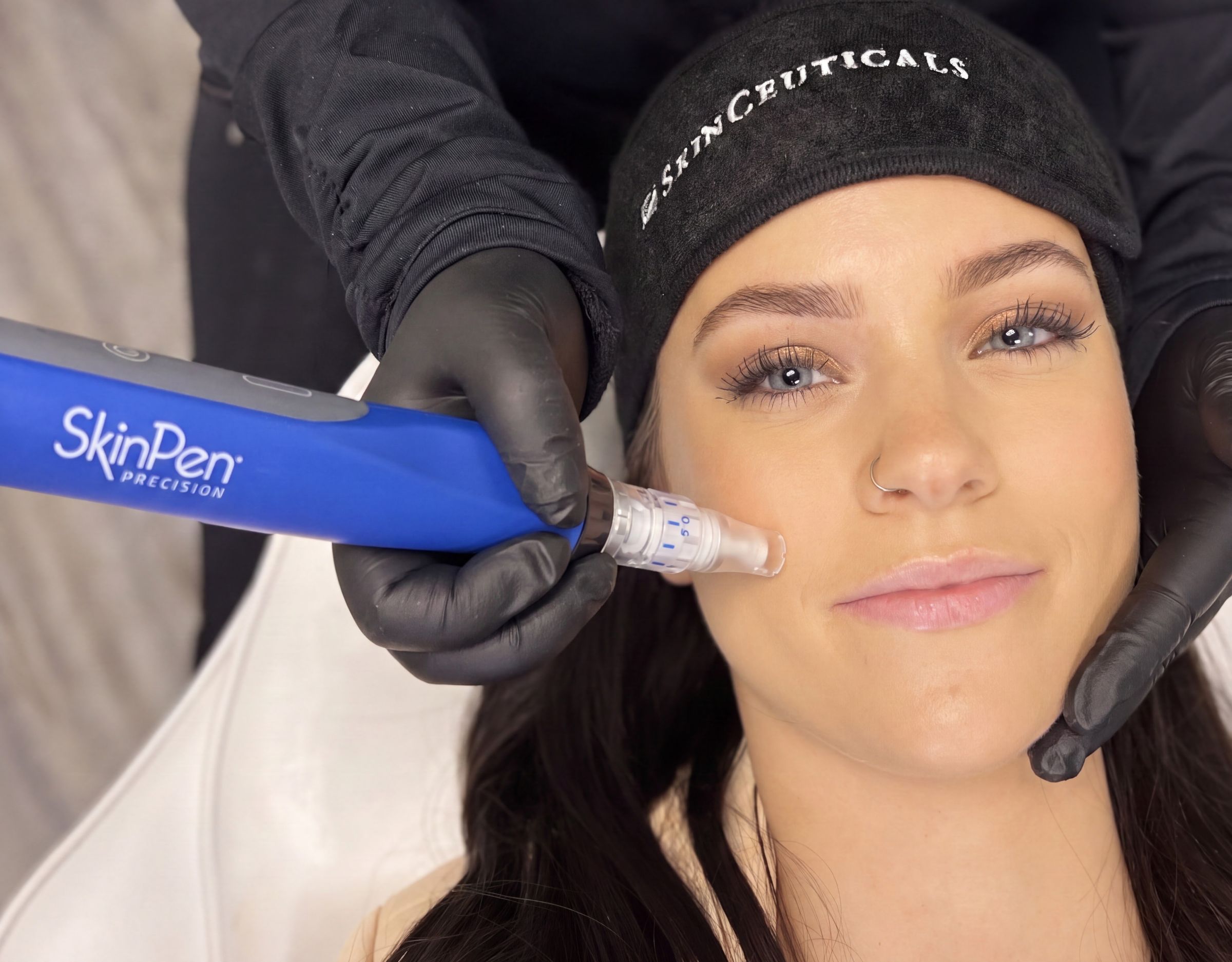
Best for depressed acne scars: microneedling, after suitability screening. Best for suitable flat post-acne hyperpigmentation: my TCA 5-Berry Peel from GlyMed Plus. Best for ongoing supportive skincare: The Deluxe Glo. My 2026 guide to chemical peel vs microneedling for acne scars starts with identifying what’s actually left behind—not choosing the strongest treatment. At Brittdaesthetics, I want your first visit to begin a thoughtful skin plan, not a race toward aggressive exfoliation.
- Chemical peel vs microneedling for acne scars: distinguish flat discoloration from depressed scars before choosing treatment.
- Microneedling addresses selected depressed scars; chemical peels can address superficial post-acne discoloration.
- Brittdaesthetics recommends Glo2 for supportive skincare, not as a replacement for structural acne-scar treatment.
- Deep, tethered or raised scars need dermatologist assessment rather than a stronger facial.
Why this matters: a dark mark isn’t always a scar
If you’re looking in the mirror and calling every leftover spot an acne scar, you’re not alone. But a flat brown mark, a lingering red area and a small indentation don’t need the same treatment. The distinction changes both your options and your expectations.
Flat brown marks often reflect post-inflammatory hyperpigmentation. Flat red or pink marks can reflect persistent vascular changes after inflammation. An indentation involves a change in skin structure, while a raised scar contains excess scar tissue.
A treatment that improves discoloration doesn’t automatically rebuild an indentation. That’s the most useful starting point for comparing acne treatments in 2026, especially when a photograph makes several different concerns look alike.
If you’re visiting from Mooresville or Lake Norman, bring your questions—and your current skincare list. You don’t need a perfect routine before we start. You do need a plan that respects active breakouts, irritation and the kind of change you want to address.
What makes the best treatment for acne scars?
I use these criteria to separate a suitable next step from an appealing treatment name:
- Scar shape: Flat discoloration, shallow depressions, narrow pits and raised scars require different approaches.
- Active acne: Inflamed breakouts need attention before procedures intended to improve established scars.
- Pigment risk: Your skin tone, previous pigment changes and treatment history affect selection and preparation.
- Skin readiness: Recent retinoid use, sun exposure, irritation and healing history matter before treatment.
- Treatment depth: Surface exfoliation and collagen-remodeling procedures address different targets.
- Consistency: Your willingness to follow aftercare and return for reassessment matters more than choosing an intense first visit.
There isn’t one winner across all six criteria. The best choice matches the concern without asking your skin to tolerate more than it should.
Acne-scar treatments at a glance
| Option | Best for | Main role | Key limitation |
|---|---|---|---|
| Microneedling | Selected depressed acne scars | Supports collagen remodeling through controlled skin injury | Doesn’t release every tethered scar or correct every deep pit |
| TCA 5-Berry Peel from GlyMed Plus, after assessment | Flat brown post-acne marks and superficial unevenness | Uses controlled chemical exfoliation | A superficial peel doesn’t rebuild deep indentations |
| The Deluxe Glo | Supportive skincare and an ongoing facial plan | Combines pod-based treatment, ultrasound-assisted serum penetration and massage | Isn’t a structural acne-scar correction procedure |
| Dermatologist-directed procedures | Deep, tethered or raised scars | Matches medical procedures to scar structure | Requires individual assessment; no single procedure fits every scar |
This is a treatments-by-concern comparison, not a promise that you should work through every option. Sometimes the right decision is to simplify your skincare first. Sometimes it’s to seek medical assessment before booking a corrective service.
1. Microneedling: best for selected depressed acne scars
Microneedling creates controlled micro-injuries that stimulate the skin’s wound-healing response. It’s used to improve the appearance of selected atrophic acne scars—the depressed scars left when acne damages supporting tissue. It doesn’t simply scrub away the surface.
That distinction matters when your main concern is a shallow indentation rather than a change in color. Improvement develops through remodeling, not through an immediate filling effect, and scar shape affects how much a particular procedure can accomplish.
Ask me about GlyMed’s microneedling protocol for acne scars!
I use GlyMed’s microneedling protocol for acne scars within a personalized treatment plan for suitable clients. Active inflammatory acne needs attention first.
Microneedling pros
- Addresses texture through collagen remodeling rather than exfoliation alone.
- Can suit selected shallow depressed scars.
- Allows a treatment plan focused on established scars rather than temporary surface smoothness.
Microneedling cons
- Doesn’t mechanically release the fibrous bands beneath tethered scars.
- Isn’t appropriate over active inflammatory acne or infected skin.
- Carries risks including irritation, infection and pigment changes; screening and aftercare matter.
Best for: Someone with established depressed acne scars whose skin and medical history support treatment.
Tell your provider about a history of abnormal scarring, cold sores, medications and recent procedures. Don’t assume that a device setting suitable for someone else is suitable for you, and don’t substitute home needling for professional assessment.
Verdict: Choose microneedling when depressed texture is the main target and your suitability assessment supports it.
2. Chemical peels: best for flat brown post-acne marks
A chemical peel uses a selected solution to create controlled exfoliation or injury at a defined depth. Superficial peels can help address uneven pigmentation and surface texture, but different acids and depths aren’t interchangeable.
When someone asks me about chemical peel vs microneedling for acne scars, I first ask whether the concern is flat or indented. A brown mark without a depression points toward a different discussion than a shadow caused by a structural scar.
Check out my TCA 5-Berry Peel from GlyMed Plus!
For suitable post-acne hyperpigmentation, this is the specific peel I’d discuss—not a promise to erase deep indentations. We’ll choose it within your personalized corrective-peel plan after reviewing your skin and preparation.
Chemical peel pros
- Can address superficial post-acne hyperpigmentation.
- Offers different formulations and strengths for individual selection.
- Can fit a broader plan for surface unevenness when the skin is ready.
Chemical peel cons
- Superficial exfoliation doesn’t correct deep structural scars.
- Irritation can worsen discoloration, particularly when treatment or aftercare is unsuitable.
- Stronger peels bring additional risks and aren’t automatically a better choice.
Best for: Someone whose main concern is flat brown post-acne discoloration or superficial unevenness, rather than deep indentations.
Lingering red marks deserve their own assessment. Don’t assume a peel that targets brown pigmentation will address persistent redness in the same way. More exfoliation is not the answer to every visible mark.
Verdict: Choose a professionally selected peel for suitable superficial concerns; skip the assumption that stronger means better.
3. The Deluxe Glo: best for supportive skincare alongside a scar plan
Glo2 combines pod-based treatment, ultrasound-assisted serum penetration and a massage step. I typically recommend Glo2 as a first treatment for most clients, with the selection adjusted to their skin. That recommendation doesn’t mean Glo2 replaces procedures intended to remodel established acne scars.
For someone concerned about acne marks, I separate overall skin care from structural correction. Hydration, surface appearance and a consistent routine deserve attention, even when a different procedure—or a dermatologist—is the better match for the scars themselves.
Check out The Deluxe Glo on our menu!
My Deluxe Glo pairs the Glo2 facial with your choice of dermaplaning or RF Firm + Lift, after suitability screening. It gives us a targeted option within your ongoing skin plan—not a replacement for scar-specific treatment.
Glo2 pros
- Provides a starting point for a personalized ongoing facial plan.
- Allows pod selection to reflect your skin’s needs and tolerance.
- Includes ultrasound-assisted serum penetration and a massage step.
Glo2 cons
- Doesn’t release tethered scars or reconstruct deep pits.
- Sensation varies by person and OxyPod strength, from light, bubbly tingling to a very active sensation.
- Requires component-specific screening; it isn’t suitable for every skin condition or circumstance.
Best for: Someone seeking supportive skincare while deciding on, preparing for or maintaining a separate scar-focused plan, when suitable.
The massage tip moves in lymphatic drainage motions. That’s why this step is described as “detox”—not because the facial removes bodily toxins. I want the explanation to be as clear as the invitation!
I recommend Glo2 every 4 weeks for most clients, individualized as needed. At Brittdaesthetics, Glo2 is an ongoing skincare option, not a promise to erase acne scars. Pregnant clients need medical clearance from their pregnancy care provider before treatment, followed by component-specific suitability screening.
Verdict: Choose Glo2 for supportive skincare; skip it as a substitute for structural acne-scar correction.
4. Dermatologist-directed procedures: best for complex scars
Some scars need more than a peel or a standard microneedling plan. A dermatologist can assess whether procedures such as subcision, focal chemical reconstruction, laser resurfacing or other scar-specific approaches fit your skin.
Subcision addresses tethering beneath selected depressed scars. Narrow, deep pits and raised scars require different decisions, which is why a single all-over treatment can miss the main problem.
Dermatologist-directed care pros
- Matches procedures to specific scar structures.
- Provides assessment for raised scars and a history of abnormal scarring.
- Allows coordinated treatment when active acne and established scars coexist.
Dermatologist-directed care cons
- Procedures have different healing requirements and complication risks.
- Combination plans can involve several stages rather than one appointment.
- Improvement doesn’t mean complete removal of every scar.
Best for: Someone with deep pits, tethered depressions, raised scars or uncertainty about the diagnosis.
Verdict: Choose dermatologist assessment when scar structure exceeds what a facial or superficial treatment can address.
Combination therapy: how I bring these treatments together
One of my favorite things to do in the treatment room is combination therapy: mixing different treatments to work toward your goal skin! Acne scars and leftover brown marks can appear together, so one treatment doesn’t have to do every job.
Here’s what a typical plan can look like in my studio, when your skin is suitable:
- Ongoing maintenance: Glo2. We keep consistent facial care in the plan, with The Deluxe Glo discussed when its added component fits your needs.
- Spring: microneedling. We focus on suitable established acne-scar texture, after active inflammatory acne is controlled.
- Fall and winter: chemical peels. For suitable hyperpigmentation, I discuss my TCA 5-Berry Peel from GlyMed Plus within a personalized peel plan.
This is an example of how I typically organize care—not a calendar everyone must follow. Timing depends on healing, sun exposure, your routine and your skin’s response. Combination therapy here means a coordinated plan across separate appointments, not automatically doing all three treatments at once. We reassess before each step, and complex scars still deserve dermatologist assessment.
How I rank these options
My 2026 recommendations put the treatment target first, then skin readiness, pigment risk and the ability to follow aftercare. This isn’t a ranking based on a claim that every option was tested head-to-head at Brittdaesthetics.
Microneedling leads for selected depressed scars; peels lead for suitable superficial discoloration. Glo2 belongs in supportive skincare, while complex scars move the conversation toward medical assessment. Different jobs, different choices.
Before treatment: be kind to your skin
Please don’t arrive feeling you need to “get your skin ready” with a last-minute exfoliation session. Extra scrubs, acids or retinoids can leave skin irritated before we’ve even chosen a treatment. Honest information helps me make a safer recommendation.
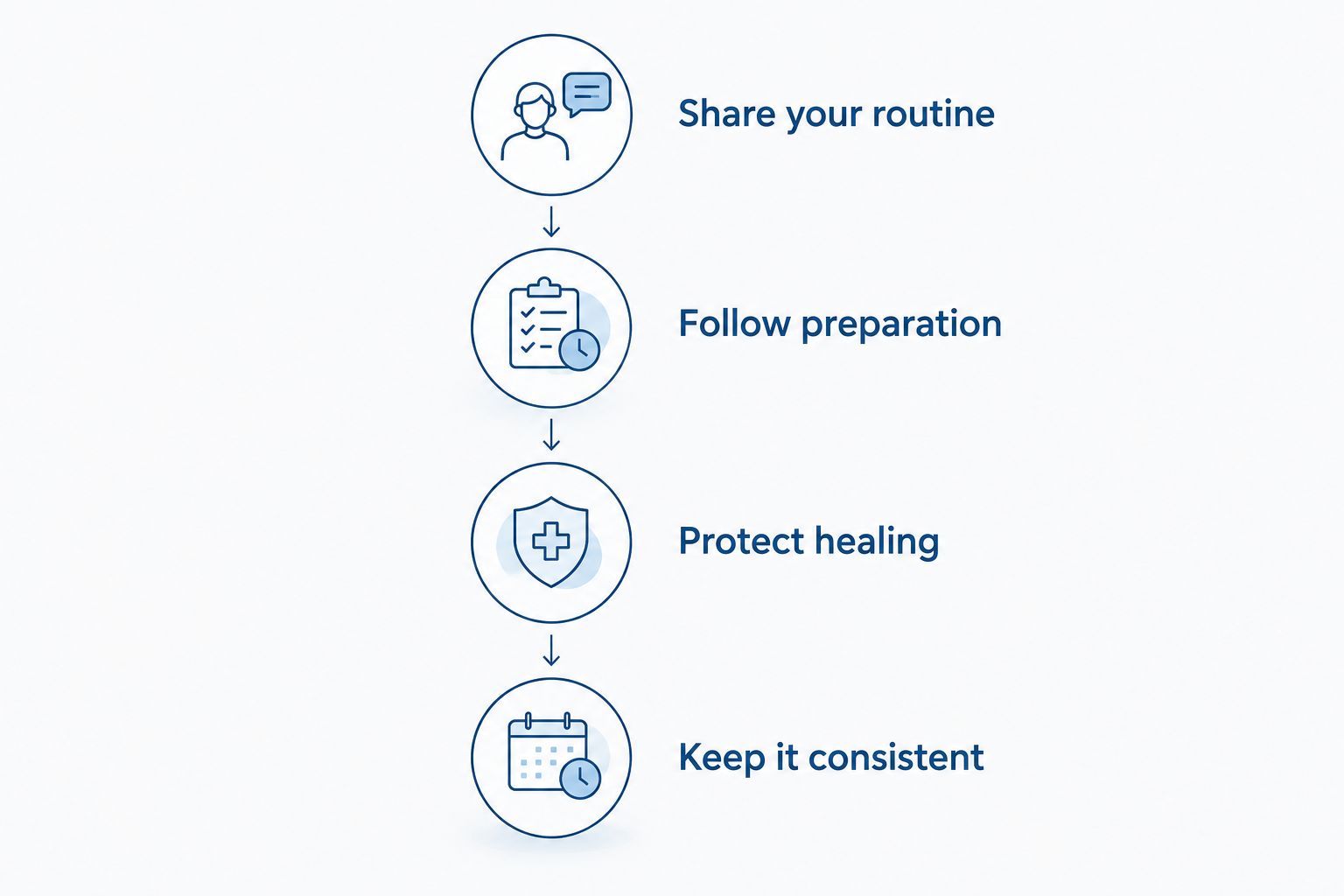
- Share your routine: Include retinol, prescription retinoids, acids, acne treatments and recent procedures.
- Follow preparation: Use the booked treatment’s published instructions for pauses; consult your prescriber before changing prescription use.
- Protect healing: Don’t pick acne or scabs, and avoid aggressive exfoliation before or after treatment.
- Keep it consistent: Gently remove makeup before bed and follow the aftercare selected for your procedure.
Use broad-spectrum SPF 30 or higher as part of daily sun protection, alongside shade and protective clothing. Follow your treatment-specific directions for application and reapplication; sunscreen doesn’t cancel the need to avoid unnecessary sun exposure while healing.
Which acne-scar treatment should you choose in 2026?
Choose by depth, not by the treatment with the most dramatic description. If you’re undecided between a chemical peel and microneedling, first determine whether you’re seeing flat discoloration, depressed texture or both. Mixed concerns can need a staged plan rather than simultaneous treatment.
For most first-time facial clients, Glo2 remains my usual starting recommendation when suitable. For an acne-scar consultation, though, I won’t confuse a welcoming first facial with definitive scar correction. Deep, tethered or raised scars deserve the right referral.
You’re welcome to start with questions. Bringing your routine and explaining what bothers you most gives us a useful place to begin—without promising that one appointment will do everything.
Let's build your combination-therapy skin plan!
Maintenance Glo2, spring microneedling and fall/winter peels can each have a place in a personalized plan. Let's talk about your acne-scar texture, leftover pigment and what suits your skin.
FAQ
Is a chemical peel or microneedling better for acne scars?
Microneedling is generally the more relevant discussion for selected depressed scars, while superficial chemical peels can address flat brown post-acne marks. Deep, tethered or raised scars need a scar-specific medical assessment.
Can a chemical peel remove deep acne scars?
A superficial chemical peel does not remove deep acne scars. Deeper or focal chemical procedures are different treatments that require appropriate medical assessment and carry additional risks.
Does Glo2 get rid of acne scars?
Glo2 is not a structural acne-scar correction procedure. At Brittdaesthetics, Glo2 supports an individualized skincare plan rather than replacing treatment for deep pits or tethered scars.
Can I have microneedling if I still have active acne?
Microneedling should not be performed over active inflammatory acne. Have the breakouts assessed and controlled before planning procedures for established scars.
Should I stop retinol before a peel or facial?
Follow the published preparation instructions for your booked treatment rather than a universal pause interval. Disclose recent retinol use, and consult your prescriber before changing prescription retinoid use.
Is a chemical peel suitable for darker skin tones?
Selected peels can be suitable for darker skin tones, but formulation, depth, preparation and pigment history matter. Irritation can cause post-inflammatory hyperpigmentation, so individualized selection is essential.
How often does Britt recommend Glo2?
Britt recommends Glo2 every 4 weeks for most clients, individualized as needed. That facial schedule is not a schedule for microneedling, peels or medical scar procedures.
One last thing
Before choosing another treatment in 2026, notice whether the mark is flat, depressed or raised—but leave the diagnosis to a qualified professional. That small distinction can change the entire plan. You don’t need flawless skin to begin; you need a treatment that matches the skin you have.